
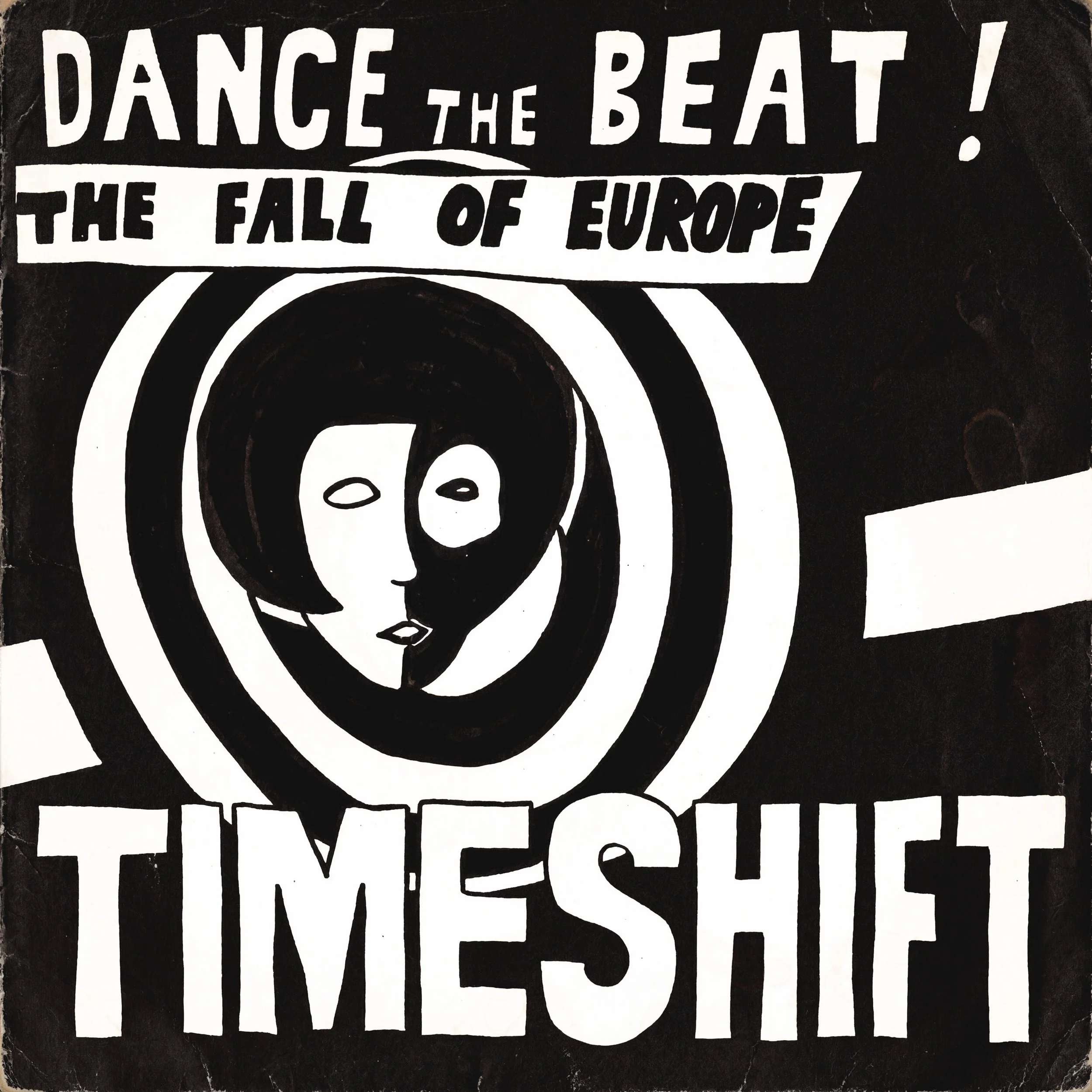
TIMESHIFT - Dance The Beat! / The Fall Of Europe
NETZ/SCHALLTER
First Released 1984 as 7” on Ton Um Ton Records
VÖ: 05.06.2026 Digital Single
SCHALL093DI
Vertrieb: Hoanzl
Kontakt: monkey.
Flashback. Vienna, a cold January in 1982: Ivan Miksovic, the lead singer, then 16 years old, and his brother Libor, guitarist and singer, then 15, organized the first concert for TIMESHIFT. Supported by various drummers and bassists, a series of gigs took place in that year, and word quickly spread that a powerhouse newcomer had appeared on the horizon.
In 1982, there was a lasting change in the lineup when Walter Cikan, then 16 years old and already an excellent bassist, joined TIMESHIFT. Around the same time, Gunther Joksch completed the new lineup as the drummer. The teenage band established itself a hotshot and played more and more concerts, while Libor and Ivan continued to develop their songwriting skills.
In late 1983, they wrote the cult garage rock songs “Dance the Beat” and “The Fall of Europe”. The tracks were released as a single in 1984 and made TIMESHIFT widely known in Vienna and beyond.
“Call it underground, beat, garage rock, psychedelia – TIMESHIFT are all that and much more”, wrote legendary Chuzpe bassist Christian Brandl to the liner note on the first mini-LP “Paranoid Fears in a Concrete World”, which dropped in 1985.
In 1986, a second mini-LP with songs written by the two brothers and produced by Fred Jakesch was released. It includes classics such as “Where Does This Way Lead To” and “Keep Abreast with the Times.”
TIMESHIFT subsequently decided to hire a new drummer, Uli Binder, who also played with “Die Pinguine”. In 1987, the new lineup recorded their first full-length LP, and the band continued to play numerous concerts, which audiences still talk about today: “The gigs were one big rush.”
Now the guys were established. TIMESHIFT had made a name for themselves with concerts and records as far afield as Germany and Switzerland and were among the figureheads of an expanded mod and garage scene.
In 1990, however, the band experienced its worst nightmare when Ivan Miksovic's brother Libor, the guitarist, committed suicide.
The band tried to find a replacement, but the end seemed inevitable. Ivan decided to close the TIMESHIFT chapter and moved to New York City.
Robert Rotifer, journalist for FM4 and Rolling Stone, later noted: “Let's not understate it: at their peak, TIMESHIFT really, really had what it took. They played the kind of garage rock (more elegantly referred to as beat at the time) that is being preached again today and practiced by various bands with or without ‘The’ in their name.”
In 2026 NETZ/SCHALLTER digitised the Timeshift discography from the 80s and made this cultural heritage available online.